TerraTight guide
Gravel gardens suit the UAE perfectly: no lawn to water, no mowing, and a clean, modern look around villas and townhouses. But anyone who has one knows the problem. Stones end up on the paving, in the pool and on the car-port floor, sand blows into the beds during a shamal, and paths slowly turn into ruts. This guide explains why gravel moves and how to keep it in place for good.
Firm edging, such as metal, stone or concrete kerbs, stops gravel from creeping onto paving, and a sensible depth stops the base showing through. This is worth doing whatever else you choose, but it does not stop stones moving within the bed.
Plastic honeycomb grids hold gravel in cells and work well for parking areas. They are less suited to decorative beds with fine stone, and they need excavation to install.
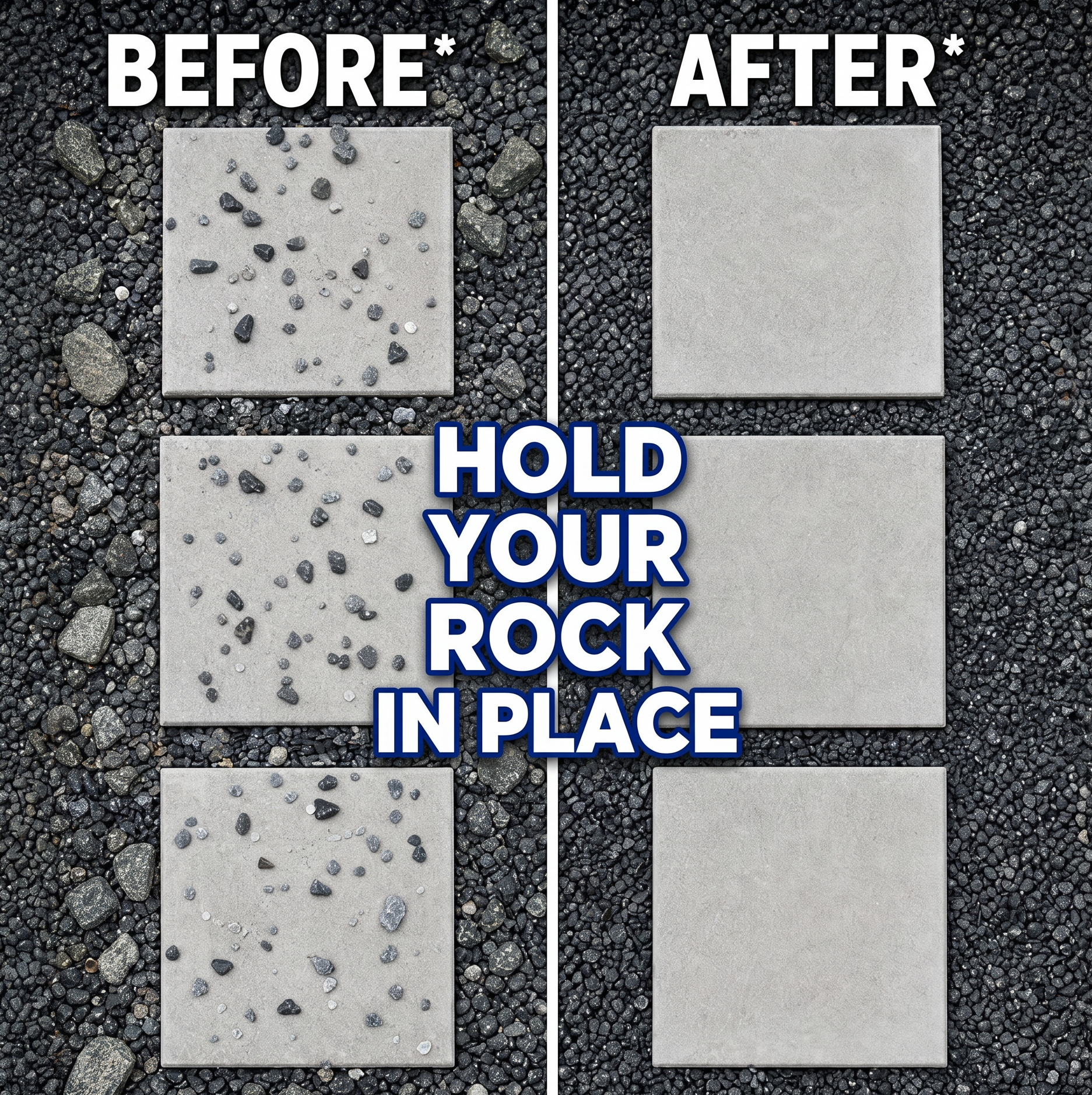
For paths, borders and decorative beds, a clear rock glue is the fastest fix. TerraTight Ease is a water-based binder that you spray straight onto existing gravel. It bonds the stones where they touch, dries invisible and stays permeable, so water still drains. There is no digging and no new material to buy.
Rock glue is designed for pedestrian areas. For driveways and anywhere cars turn, a resin bound surface is the right solution.
Use rock glue undiluted on paths that take regular foot traffic, and diluted 1:2 with water on decorative beds.
| Bottle | Undiluted | Diluted 1:2 |
|---|---|---|
| 2 L | about 4 m² | up to 12 m² |
| 5 L | about 10 m² | up to 20 m² |
Example: a garden path 1 m wide and 12 m long (12 m²) needs roughly one 5 L and one 2 L bottle undiluted. A 20 m² decorative bed needs a single 5 L bottle diluted 1:2.
Rock glue performs best on pieces up to about 5 mm: pea gravel, small pebbles, crushed stone, decorative and red sand, bark and mulch. Larger stones of 5 to 20 mm can be fixed too, but need extra coats and a longer cure.
Not sure whether your garden needs rock glue or a resin bound path? Send us a photo, or see more answers in our FAQ.
Planning a project?
Send the size, the surface and the location. We will recommend what to use and deliver it from Jebel Ali.